
Improved SaaS TTFB by 90% via Edge Caching without Spending a Dime
Tools
A WordPress-hosted SaaS platform featuring over 400 pages was experiencing significant performance degradation reported by users. Despite achieving 95+ scores on PageSpeed Insights, real-world performance was lagging. To uncover the truth behind these discrepancies, I implemented Creeper RUM Vitals to capture Real User Monitoring (RUM) metrics.
The Challenge
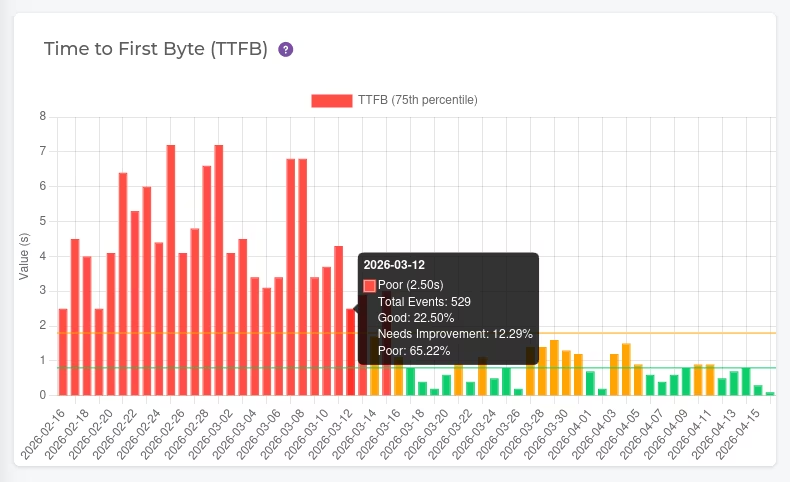
Detailed analysis revealed a staggering Largest Contentful Paint (LCP) time that often exceeded 15 seconds. While standard optimizations frequently focus on image compression or JavaScript deferral, my investigation pinpointed the true bottleneck: a Time to First Byte (TTFB) averaging over 6.6 seconds. This confirmed that the primary issue was server-side latency rather than client-side asset delivery.
The Solution
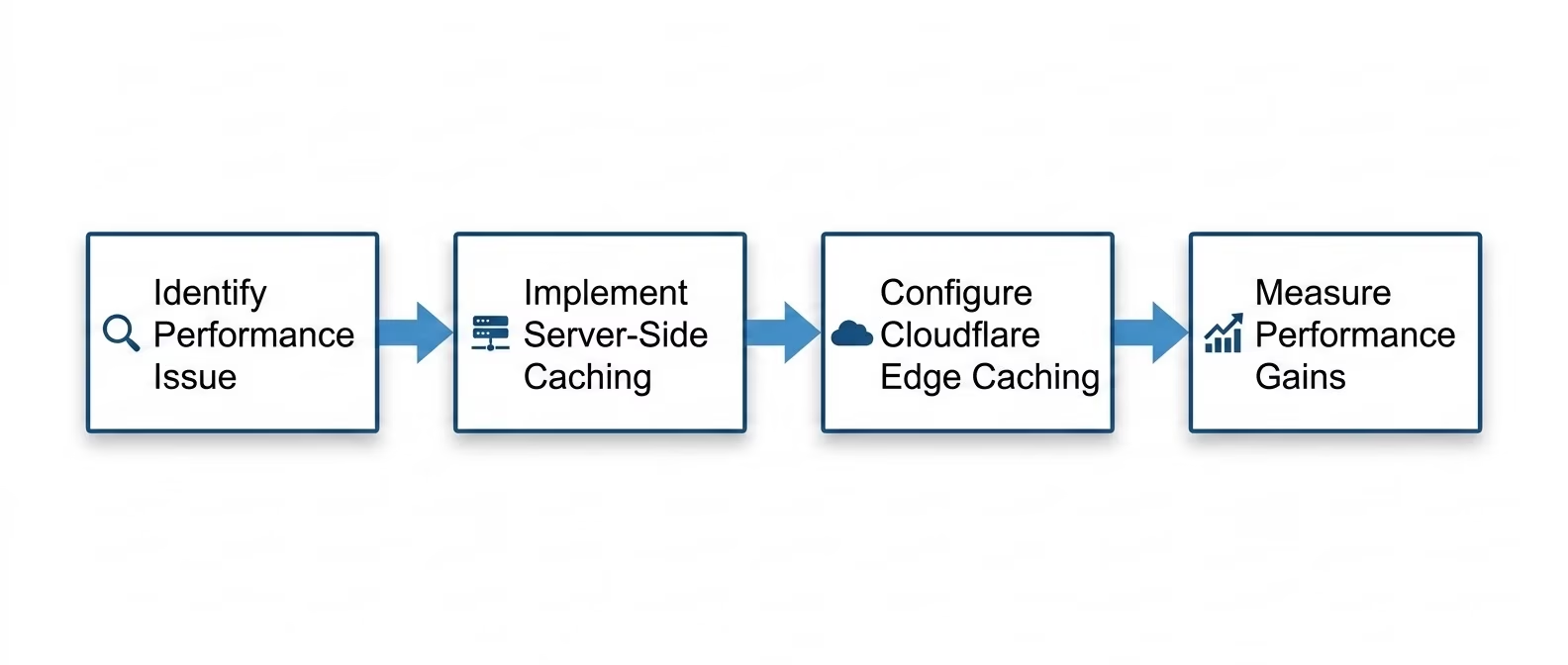
Rather than migrating to expensive new hosting, I focused on infrastructure efficiency by implementing a robust two-tier caching strategy:
- Server-side Caching: To reduce the processing load on WordPress using W3 Total Cache.
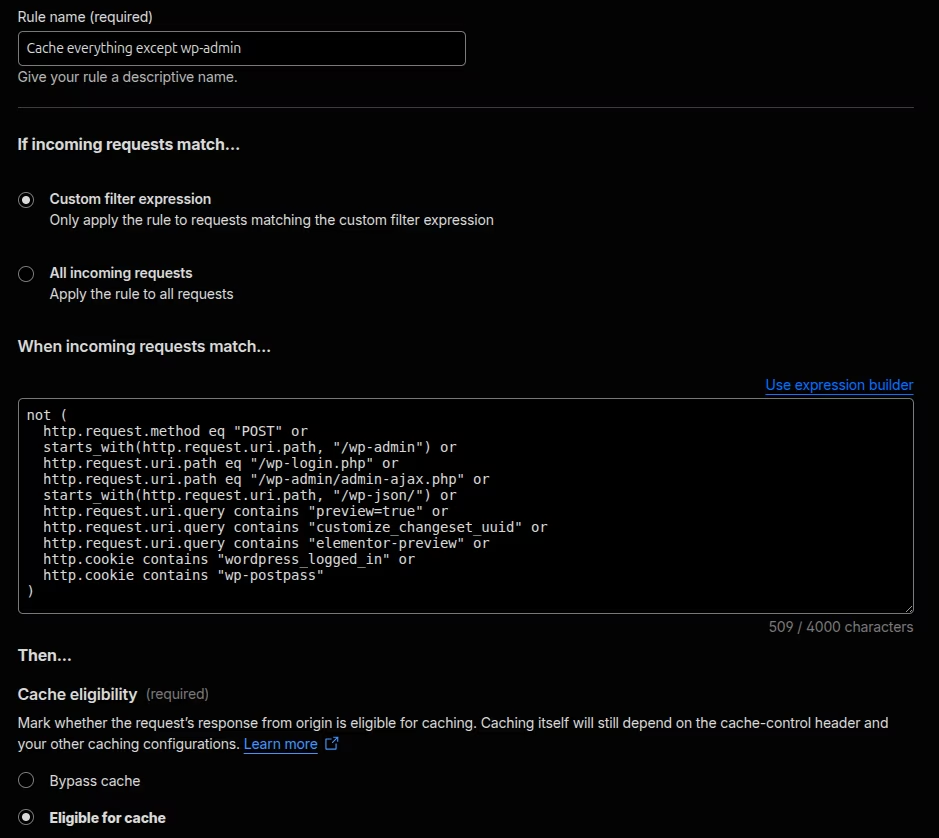
- Edge Server Caching (Cloudflare): To deliver content from locations closest to the end-users.
The custom cache rule setup I used on Cloudflare can be found in the screenshot below:
Results
By precisely configuring edge caching, I reduced the TTFB from 6.6 seconds to under 500ms, with peaks as low as 100ms. Consequently, the LCP dropped to a swift 1.2s.
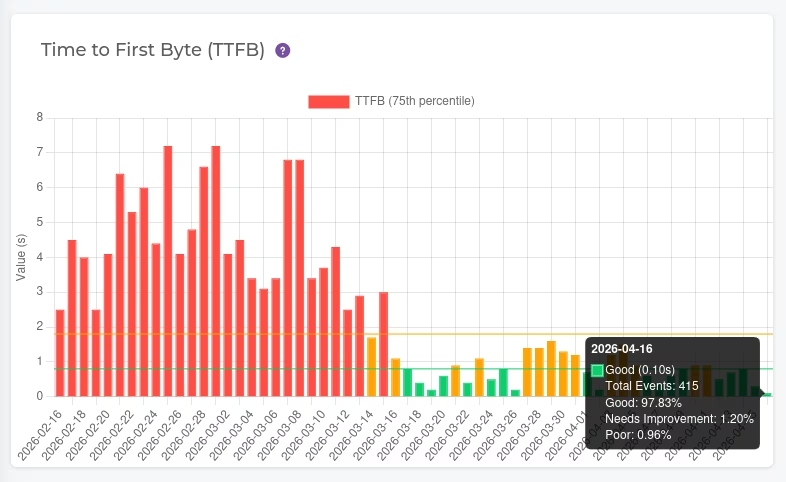
This project highlights that strategic infrastructure configuration often yields better results than costly migrations or complex asset modifications.
| Metric | Before | After |
| TTFB (Time to First Byte) | 6.6s | <500ms |
| LCP (Largest Contentful Paint) | >15s | 1.2s |